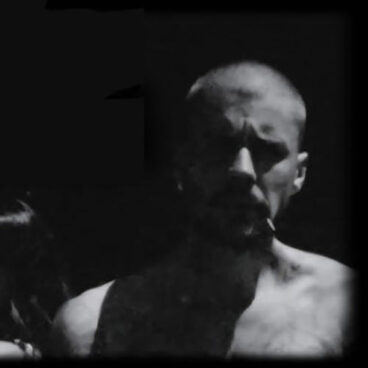
Desh Saxena is a young musician from London who earlier this year said he was going to write, record, and publish a song a day for 100 days.
And he did.
But it’s not the songs that caught my attention – although some certainly caught my ear – it’s the work ethic. You can feel the difference between tracks 1 to 10 and tracks 90 to 100 – there’s a progression that is hard to describe but is just there – self-evident as a result of doing the work. And I’m drawn to that – I think that’s what makes an artist – it’s hard, it’s difficult, you have to be a little mad and strange to embark on the journey but I’m so here for it.
To celebrate this achievement and the launch of his first track “Where are you going?” – we thought it would be cool to ask Desh our Spotlight questions – this is a good one ;-p
Tell us about your 100 songs in 100 days project, what inspired it, what are your hopes for it?
Life can be a bitch sometimes, and for me, it hit hard these last few years. What kept me going was setting targets to aim for. First, it was getting my A-Levels done – luckily, I managed to get into my first-choice uni, but I was in no state to start the course in September.
Then the goal became getting to my sister’s wedding. After that, it was waiting for my favourite book series to conclude. But by mid-December, I’d run out of things to hold on for. Now what?
I’d burnt all the bridges I could’ve used to make and perform music. I had no direction in life. So, in December, I tried writing a song a day for a week. I got to day four and wrote a great song called Entropy (which I posted on my Instagram), but after that, I went back to doing nothing.
By the time 1st January rolled around, I thought, “Fuck it – I’m doing nothing anyway. What do I have to lose?” So I declared I’d post 100 songs in 100 days. On day one, I said in the video that if I missed a day, I’d catch up – but I didn’t miss a single one.
I’ve surpassed every expectation I had. I didn’t expect to produce music videos for the 50th and 100th songs. I didn’t think I’d make content for so many of them, or even fully mix over 60. There were bad days and good days, but I can see the growth – in video quality, sound, performance, confidence, and happiness – from day 1 to day 100.
Most of all, I finally have direction. I now have 96 original demos (I did 3 covers and a parody – but I’d like to think I put an interesting twist on all of them), and that’s a huge pool to pick from for my career as an artist.
All I hope is that five years from now, I can look back and see just how far I’ve come – how much I’ve grown as a musician, songwriter, producer, and creator.
What are your upcoming plans and how can people support you?
My plans keep changing day by day, but the general idea is this: build a community. I think the online community I’ve started on Farcaster is a solid foundation, and now I want to start building one locally too – luckily, I live in one of the best cities for music in the world!
One thing I proved to myself with the 100-day challenge is that I’ve got the chops as a musician. Now, I need to develop who I am as an artist – and that’s a process that won’t happen overnight. I plan to keep releasing music consistently – both old and new – turning demos into fully produced tracks, and continuing to explore experiments with the blockchain.
Right now, in the month of May, I’m releasing two singles, each with a B-side. After that, I’ll be working on an EP, and then an album.
The best way for people to support me is by checking out my website and subscribing to my blog or mailing list, or minting one of my NFTs. Also, of course, by listening to my music – and sharing your experience of listening! Did you enjoy it? What songwriting technique would you like me to try next? Why don’t you let me know by commenting on my socials?
Name one song, or album, other than your own, that you would recommend to listeners – why?
My favourite album is Ten by Pearl Jam. I own it on CD, but I’m still searching for a vinyl copy – specifically the Brendan O’Brien remix.
What I love about Ten is how it is grunge meets classic rock. It keeps that edgy lyricism and interesting song structure, especially in tracks like Jeremy and my personal favourite, Garden. (I highly recommend the Brendan O’Brien mix of Garden – it completely transforms the track in my opinion.)
At the same time, the album delivers incredible riffs and guitar solos on songs like Alive and Even Flow. What I also really appreciate is how the album feels cyclical – the ending flows back into the beginning, making it a complete experience.
What are you curious about at the moment? Why?
I’m quite curious about what the future of blockchain technology holds for the music industry. In 2021, big artists were releasing NFTs, but since then, these NFTs have plummeted in value. The last couple of years have been full of experimenting, chopping and changing, and crashing out.
As I’m writing this, seemingly the biggest platform for NFT music – sound.xyz – is closing down and pivoting. This is both concerning and exciting. How can we make web3 music last in the long term? Is it through positioning it as a digital vinyl? Is it through tying NFTs to physical products?
What we can say for sure is nothing so far has worked – luckily for a new artist like myself, that means the world is my oyster. If an idea doesn’t work, oh well, let’s move on. If it does? Fantastic!
One clear path I see is improving the user experience – both from a fan side and an artist side. If a song is on the blockchain, it should have one easily accessible address that everyone can see and be a part of.
Unfortunately, this hasn’t happened yet. To get access to a song, you have to jump through hoops and look at long-winded addresses and IPFS URLs. And once you get there, you still need to figure out a way to play the song.
The route I’ve seen so far seems to be: make it more centralised – have one hub for people to go to and listen to on-chain music. However, that clearly hasn’t worked – so what next?
If you had $2,500 to spend on music marketing, where would you spend it and why?
This is an important question for all musicians, and I don’t really have a definitive answer yet. Here’s what I’m doing right now, and I’ll also discuss how having this much disposable money would be helpful.
At the moment, I’m learning about marketing by reading books (like the ones by Ari Herstand and Donald Passman) and researching the music business. What I’ve learned so far is that the best way to market is to make marketers’ jobs easier. Essentially, I need to figure out who I am as an artist, define my aesthetic, identify my fans, and find ways to make myself accessible to all types of fans – among many other things.
What I’m currently working on for this is perfecting my website, branding, and sound. The music I released on May 16th is a test for how to make music both accessible and exclusive, while also perfecting my profile page on streaming platforms.
If I had $2,500 to spend, I could potentially use it to hire a photographer for professional photos, employ a developer to help improve my website (though AI is doing a great job so far), and work with graphic designers for artwork and a logo. The books I’ve been reading also mention using platforms like Facebook and TikTok for ads. Once I feel my content creation on these platforms is at a decent level, I’d invest time into researching these ads further – possibly even taking a course on them.
If you could summon one musician back from the dead to collaborate with, who would it be? Why? What do you think you would create?
That’s a difficult question. I initially thought of Chris Cornell, but what we would create would mostly be his genius, with me as his accompanist on the guitar. I wouldn’t be complaining – hell yeah, I’d love to accompany Chris – but it might not lead to anything too interesting (though I’m sure writing with Chris would be transcendent).
Instead, I’m going with Tansen, an almost mythical Hindu composer from the 1500s. I say this because I recently watched the Indian film composer Ilaiyaraaja perform a classical symphony. It was pretty good, but it contained no Indian classical elements. I bring this up because the Beatles went to Rishikesh and wrote Within You Without You, blending their Western rock with Indian music.
I say this because, despite my personal dislike for Indian classical music, learning why I’m wrong from the almost messianic figure of Indian music himself – Tansen – seems like a fantasy you’d write about when composing epic poems like the Odyssey or the Mahabharata.
I can’t imagine what we could create if we merged our music together. Could it be a Western symphony with Indian elements? Could it be a rock song, inspired by Within You Without You, but incorporating elements of Bohemian Rhapsody and Stairway to Heaven?
All I know is that if I summoned Chris Cornell to my studio to collaborate, I’d talk about it for the rest of my life. But if I summoned Tansen, the world could remember it for the next 500 years.
What is a piece of music that has changed you?
In spite of Dave Grohl’s recent antics, I’m a big Foo Fighters fan. When Taylor Hawkins passed away, I was shocked and upset. I hadn’t ever watched them live, and didn’t think anyone could replace him. Then Josh Freeze came in, and I got to watch them at the London Stadium last year.
Despite being a massive Foo Fighters fan, My Hero, Best of You, and Everlong were some of my least favourite songs. Why? I didn’t like how they sounded – I couldn’t really explain it.
Then, during the performance, Dave introduced the band, and the loudest, longest cheer was for Josh Freeze. Then Shane Hawkins came on and played My Hero. They closed their set with Best of You, and the encore ended with Everlong and fireworks.
Finally, I got it. These songs weren’t made to be heard with headphones on; they were made to have a stadium full of people singing the songs back to you. This opened my eyes. It’s easy for an artist to fret about how something sounds when it’s mixed, but the reality is – and Everlong proves this for me – the best songs are about the feeling you get after experiencing them.
One of my friends was crying after the end of Everlong, despite never being a big Foo Fighters fan. Holy shit, that’s what music can do.
What do you think of Nick Cave’s response to an AI-generated track “in the style of Nick Cave”?
After reading Nick Cave’s article, I initially agreed, but the more I thought about it, I realized it’s not as black and white. I have a lot of things to say on this topic. Interestingly, I find myself questioning more than agreeing with the article.
But first:
- Please don’t steal from people to train AI (looking at you, SoundCloud).
- Right now, AI music simply isn’t good enough. It’s more useful as a tool (e.g., AI mastering plugins) than as a creative outlet, and people who use AI for their music often do it as a gimmick.
- People need to create their own ethical framework when interacting with AI. For instance, I’m happy to use AI for coding my website or making captions, but I never use AI in the songwriting or mixing process. This could change, but as I said, it’s simply not good enough to co-write songs with right now, and it doesn’t really help me much in writing a song. If people use AI in their music and it sounds good, good for them.
Here are my thoughts: I approach this by assuming AI-generated music is art rather than entertainment, because that conversation feels more divisive and interesting.
“Songs arise out of suffering, by which I mean they are predicated upon the complex, internal human struggle of creation.”
Though this can be true, I don’t think it’s the full picture. I don’t see creation as a fight or struggle; I see it more as a flowing river, with all your experiences being tributaries that meld into one big body. Creativity is the outlet, the place where the river meets the ocean. I see songs as waiting to be written, rather than something that comes out of thin air. Yes, some songs are born from suffering, after all you could encounter rapids or dirty water, but a song can come from anything. This isn’t really AI-related, though this could be why our views differ slightly.
“What makes a great song great is not its close resemblance to a recognizable work. Writing a good song is not mimicry, or replication, or pastiche; it is the opposite.”
Again, though I agree with this to an extent, I also believe that all art is inspired by something. For instance, everyone talks about how influential The Beatles were. Without them, pop and rock music would be completely different today. Blackbird by The Beatles was inspired by a Bach piece, Smoke on the Water was inspired by Beethoven’s Fifth. Without Bach and Beethoven, music as a whole would look entirely inconceivable.
All art has inspiration, whether that’s another song, a memory, or a picture. One could argue that all art is, to some extent, derivative. This is not to say that art isn’t innovative or unique – Bach, Beethoven, and The Beatles are known because they broke all the rules and invented things that didn’t exist before. In a way, I feel we could be restrained by the fact that we are all humans. We think a certain way, we feel a certain way. If you look at even non-Western derivative music, it is completely different. A different being entirely wouldn’t have these premonitions, and we wouldn’t like what it sounds like most of the time. But I would argue the same thing about expressionism, though I still need to study that in A-Level music.
“ChatGPT’s melancholy role is that it is destined to imitate and can never have an authentic human experience, no matter how devalued and inconsequential the human experience may in time become.”
What if the music wasn’t derivative and was actually good? Nick Cave touches upon this throughout his article, and I think that’s something more thought-provoking.
I’m a sci-fi nut, and three books I love are The Murderbot Diaries by Martha Wells, A Long Way to a Small, Angry Planet by Becky Chambers, and Expiration Day by William Campbell Powell. All these books feature sentient AIs that you can relate to, empathize with, and who have real relationships with other living beings (I say this because there are aliens as well as humans). Powell’s book starts with you not knowing the main character is an AI, and then it’s revealed. It’s a good exercise in empathizing with them. The Becky Chambers book uses the word “technophobia,” where AIs are seen as slaves with minimal rights, heavy regulations, and no ability to own a physical body – they have to be part of a computer, i.e., on a ship. However, these AIs are still capable of love, emotions, and experiencing fear, anger, and happiness.
Right now, and for the foreseeable future, AI is not sentient and has no lived experiences. Any music it creates simply can’t be artistic. It’s not good enough to even be considered entertainment yet. But what if, in the future, we live in a world where an AI has lived experiences, where they are “indistinguishable” from humans, with careers, families, and the ability to love, hate, and suffer? Could I become a fan of their music?
Nick Cave says that AI music will always be a replication. As I said, you could argue that without Bach or The Beatles, music would look very different. So, in a world where art has influences and AI music is indistinguishable from human-created music, are we right to call that an apocalypse, a dystopia? Or are we all just a bit technophobic?
How do you feel about the future? Optimistic? Pessimistic? Why?
The songs I am releasing in May tackle this topic from all angles. Sometimes I’m optimistic, sometimes I’m pessimistic, but most of the time, I don’t know. Is that scary? Yes. All I can do is try my best to steer myself down a path where I am happy and content.
All that philosophical BS aside, I am 19 and just starting out on a long music journey as an artist. I’m also going to uni next year for one of the best music courses in the country, so I am excited. I don’t know what the next five years hold – for all I know, World War III could happen. But assuming the world doesn’t end, I hope I can look back in ten years and laugh at myself, my hundred songs, and this interview.
If you were granted a short audience with the omnipotent being and could play them one track of yours so that they would know who you are (in that moment), what track would that be?
That would be So Wide Awake (The Little Things in Life). It’s releasing on the 30th of May, and I wrote and posted the demo on day 42 of my songwriting challenge. I was in a “dirty water” portion of my challenge at that point; I think my worst three songs were songs 40, 43, and 44. Again, this was song 42. So, this song came out of nowhere.
Remember the river analogy from before? Well, this song was probably an oyster under a dead fish on the riverbed that somehow got dislodged and flowed into the ocean in a matter of minutes. In the verse, I use the chord progression I-IV (which I turn to a lot in my songs), albeit with a Seventh chord in between.
The chorus’s chord progression makes use of cadences to build tension and resolution – something I actively tried to do in this song after watching the Robbie Williams biopic Better Man, where there’s a scene with Guy Chambers teaching Robbie the technique of extending the chorus with an imperfect cadence.
It’s a song that builds up in intensity, and I’m a sucker for those kinds of songs. It sounds good with just me and an acoustic guitar or a piano playing chords, no matter what key I use, which tells me it has good harmony and melody.
Finally, the lyrics are all about that philosophical BS the omnipotent being is loved for – what is important in life? Money, fame, happiness? I argue that it’s happiness, and all the small things that make you happy – not winning the lottery. So, it’s a good song, and the omnipotent being would probably dig the lyrics. What else? My mother likes it, and I gotta listen to my number one fan!
Desh Saxena
Desh Saxena is an independent rock musician, songwriter, and producer. He’s been playing music for as long as he can remember and started writing music at seven, specializing in rock. Over the years, he’s released two albums—producing one entirely on his laptop—and played everywhere from the Royal Albert Hall to London’s local venues. Most recently, Desh challenged himself to write, film, and post a song a day for 100 days, and now he’s on a mission to become web3’s first rockstar.
Songwriter, Producer, Musician | Becoming web3’s first rockstar: deshsaxena.com