Noah Baerman’s cool.
Jazz pianist, composer, educator at Wesleyan, founder of the Resonant Motion nonprofit, and recording artist behind many projects, most recently, his Right Now series. Instead of working with world class sidemen, this time it’s just Noah on keyboards – it’s different and it’s intriguing, and it got me reaching out to learn more.
You can experience the full series here:
- Right Now, Vol.1: Songs of Conflict and Comfort
- Right Now, Vol.2: Songs of Solidarity
- Right Now, Vol.3: Our Search for Peace
What track from Right Now Volume 2: Songs of Solidarity should we be listening to when reading these responses?
Let’s make it “Brown Baby” by Oscar Brown Jr. (albeit better known for Nina Simone’s version).
You’ve always used music as more than just expression – when did you first realize music could be a force for justice, not just beauty?
It’s hard to say when that became a conscious realization, in that there were numerous songs throughout my youth that moved me in that way, but I never really conceived it as a distinction – in my mind music was everything, so justice was just part of everything. When I was a teenager and writing songs for my rock band, a song about my lovelorn anguish and a song criticizing warmongering were essentially the same, both just expressions of what thoughts and emotions needed a vehicle for expression and might resonate with somebody. Once I started making albums, I unintentionally established a pattern of alternating between “message-based” projects and projects that were governed only by the music itself. At a certain point I realized that most of the tunes on even the projects that were less conceptually heavy also had some sort of message, and that led to my realizing that this had organically become a global sense of purpose for me, which in turn led to my founding the nonprofit Resonant Motion in 2012.
Was there a specific moment or event that crystallized the idea for the Right Now series?
In November, a few days after the election, I played a concert at Wesleyan University, where I also teach. It had been scheduled months prior and the repertoire was a selection of material from the jazz musicians Kenny Barron and Bill Barron, none of it explicitly related to social consciousness or really even frameable as such. However, the spirit in the air and a few fairly general statements I made from the stage led to a palpable energy of people banding together and taking nourishment from our attempts to give ourselves fully in service of some sort of encouragement. A week later I set up a makeshift recording space in my office at home, recorded several tunes that spoke to me in that moment as applicable to the fear and anger and determination that was overwhelming me. It was therapeutic (and, I dare say, sounded pretty good), so at that point I started thinking about other songs that were similarly relevant and by the end of December I had had a few such spurts, enough for four albums’ worth of material.
You’ve described your covers as ‘renditions’ that carry both reverence and purpose. What’s the difference between playing a song and ‘inhabiting’ it, especially in this context?
Though this is not a phenomenon exclusive to jazz, sometimes a song is treated less as a work of art to be presented for its intrinsic expressive qualities and more as a vehicle for creativity, exploration, improvisational common ground among musicians who have that song as a shared frame of reference, and so on. So when a jazz musician plays “Summertime,” it may be because they love the song and the song itself expresses something, and/or it may be about what that musician wants to express and explore independently, with that song providing a context – both approaches are valid (and not even mutually exclusive) but they represent a different relationship with source material, which is one of the reasons why jazz musicians seldom use the term “cover song” when they interpret existing material. This distinction, which I talk about regularly when teaching, is important for determining what aspects of a song we feel invite reinterpretation and what aspects are the anchors that need to be left alone to preserve the integrity of that piece.
For this project, every song I chose was relevant based on what it expresses and how it makes me feel and so it was vitally important for me to figure out what would preserve or even amplify that feeling. In some cases that was pretty straightforward, but in most cases I was taking things from well outside the stylistic wheelhouse that would seem most directly relevant to the keyboard-only format I was using. So how could I take material by Pete Seeger or Patti Smith or Sweet Honey in the Rock or Jimmy Cliff or the Grateful Dead and retain the emotional essence without vocals or other instruments? The techniques vary for doing that sort of thing, but the common thread is that if I have a meaningful relationship with the material (“inhabiting” it, as you point out) then that serves as a barometer for what musical choices will align properly – sometimes that involves subtle changes to the music, sometimes dramatic ones, but if it feels like the meaning and emotion are intact, then I know I’ve done my job.
What’s your internal process like when you sit at the piano with a song that’s been culturally or politically significant – how do you avoid cliché and still stay true to the emotion?
It all starts with two seemingly disparate processes. One process, and this sort of piggybacks off the previous response, is making sure that I’m in a place of openness and sincerity. In other words, the purer my emotional relationship is with the material and the subject matter, the more I can get out of my own way and trust my impulses. I sometimes wish I had a more concrete formula for that, if only to share with others, but for me it really does come down to that kind of attunement. And then the other process is that of constant practice and study and general attention to detail on the musical end. Sometimes there is song-specific work that needs to be done, but by and large I thrive most when my musical skill building and maintenance are getting enough general attention that I can trust my hands and ears to do their job in direct and comparatively un-self-conscious response to whatever material and whatever emotion is relevant in that moment. I view it as similar to being a supportive friend to someone going through a hard time. Part of it is showing up in the right spirit and part of it is systematically and regularly working on becoming the sort of person who has the necessary skills to be a source of uplift in those scenarios.
Claire’s Continuum keeps showing up in the margins of your work, never loudly, but always present. What role does her legacy play in how you make music now?
(Claire Randall was Noah’s friend, Claire’s Continuum is the initiative that was started in her name)
Losing my friend, collaborator, and former student Claire Randall, who was murdered in 2016, was certainly a turning point in my adult life. On a purely tangible level I can point to my Love Right album (only available on Bandcamp), a stylistically diverse double album in tribute to Claire with 100 musical collaborators helping me out, or to Resonant Motion’s establishment of the Claire’s Continuum initiative, a commissioning program for socially conscious art by first-time collaborators. More abstractly, Claire was brave in life, in art, and in making connections with others, and I hope that I have been able to take that mantle to at least some degree. It’s a cliché and an overstatement to suggest that we have total agency over our emotions and how we frame our experiences. That said, it is clear to me that in the wake of loss I can become embittered and cynical or I can become determined to provide an antidote to despair and violence. I can’t rationally say that one response is more valid or appropriate, but I know which one gives me a fighting chance in using my brief time on this planet to have a net-positive outcome, and my determination to honor Claire’s spirit is an important example of this.
You teach socially conscious music to young people – what have they taught you back? What surprised you in that exchange?
That’s a great question and you would think my answer to this one would be among the lengthiest in this interview. To be honest, though, the answer is evolving as I process the most recent semester, where I taught a course on the subject at Wesleyan for the first time. Maybe this is a semantic distinction about which nobody but me cares, but aside from some micro-level stuff such as introducing me to songs I hadn’t heard, I don’t feel like my students have “taught” me much on this subject in the sense of exposing me to ideas or information to which I was previously oblivious. What they have done is deeply affirm my hope for the future and my respect for young people, present and past. Deciding to teach this sticky and multifacetedly vulnerable subject was a bit of a risk, one built on a belief in some of the core capacities of youth: energy, creativity, empathy, curiosity, and idealism. The work my students did this year was inspiring and I am gratified and frankly also a bit relieved to have this affirmation that our young folks are far from the zombified, politically apathetic slackers that some might portray them to be.
Many artists channel their pain into work – but your music feels like it goes one step further, into transformation. Where do you find the energy to do that again and again?
Thank you. It beats the heck out of wallowing, I guess? For me there are a couple layers of pain that are pertinent to my musical process. There is the daily physical pain of having Ehlers-Danlos Syndrome, something that is certainly exacerbated by playing the piano, traveling to perform, and so on. Then there is the emotional pain that underscores some of the personal and societal issues that I use music to express. Much of what sustains me on all levels of my existence is hope – if I see a path to something better, that provides the ballast for my efforts even if the results aren’t immediate or guaranteed. So in that sense the transformative possibilities of transforming pain through sound is part of what keeps me from feeling defeated, and when things are going well that is both the source of energy and the fruit of that energy. Eventually the challenges with my body will likely present too steep an uphill battle, but I’m going to keep doing what I can in the meantime.
This project spans genres, decades, and political moments – how do you decide which songs belong in the ‘Right Now’ frame?
That decision making process was a combination of pure intuition and meticulous spreadsheet-crunching. The brainstorming part encompassed all material I could think of that I found both moving and relevant to my need to illuminate our shared struggle in this fraught moment in society and our shared need to find the inspiration we need to roll up our sleeves and fight back. Then, as I often do when planning a track list for an album or a set list for a performance, I went to the spreadsheets to make sure that I maximized flow (e.g. avoiding homogeneity of tempo, key, groove, and so on) and diversity of material and composers/original artists. There are enough “almost made the list” tunes for another couple albums, though I think the immediacy of how this project came together was such that I’ll be moving on.
If you were granted a short audience with the omnipotent being and could play them one track of yours so that they would know who you are (in that moment), what track would that be?
How short an audience? Would it be cheating to say the “Know Thyself” suite, which is a single track but is 65 minutes long? I’d choose that not because it’s a loophole to get more music in but because it’s demonstrative of me really digging deep on all levels, emotionally, conceptually, technically. If the administrative assistant responsible for the omnipotent being’s scheduling deems that (or the 22 minute “Cliff Palace” from Love Right, similar in terms of digging deep) to be excessive, then I’ll take “Lester” from my Ripples album. It’s an attempt to illuminate some heavy subject matter (the determination to love amidst loss) and features some extraordinary peers (Jimmy Greene, a featured soloist on this one, Kris Allen, Chris Dingman, Linda May Han Oh, and Johnathan Blake) as well as my mentor, Kenny Barron (playing piano, as I slide over to organ).
Finally – Swinging a groove or swinging a tennis racket – which one is more fun?
Oof – well, I hung up my racquet for good in 2014 so that particular flavor of fun exists only in my memory. I will say that I aspire to approach performing music the way I experienced life on the tennis court on a good day – exhilarating, spontaneous, energetic, focused, and unencumbered by the baggage of expecting to be good by any metrics aside from maximizing my own potential.
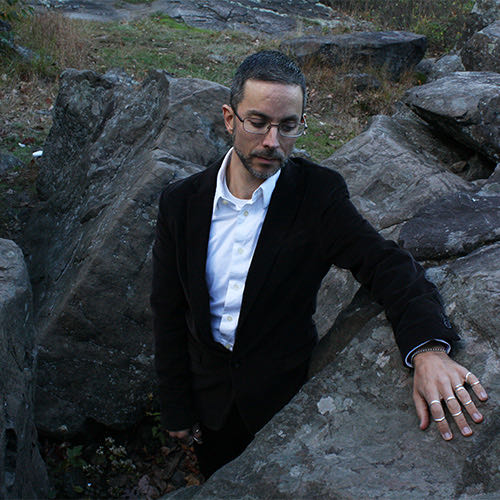
Noah Baerman
Noah Baerman is a jazz pianist, composer, educator, and activist who has recorded over a dozen acclaimed albums under his own name and several more as a co-leader of cooperative ensembles including Trio 149, Envisage Collective, and Playdate, earning praise from Downbeat, Jazz Times, Jazziz, the NYC Jazz Record, WNPR’s Jazz Corridor, and the Village Voice. He is the author of ten instructional books published by Alfred Publishing Company and teaches at several institutions including Wesleyan University, where he is the jazz piano instructor and has directed the Jazz Ensemble since 2007. He also plays guitar and sings in the folk/blues duo Stankeye Jones and the Vagabond Librarians alongside his wife, artist Kate Ten Eyck. In 2012 he founded Resonant Motion, a non-profit dedicated to the intersection of music and positive change. He has been awarded an Artists Respond grant from the CT Office of the Arts and the Arts Advocacy award from the City of Middletown, CT, where July 10, 2020 was declared “Noah Baerman Day” in the city.
Andrew note:
I’ve known Noah for over twenty years – we were connected through Ehlers-Danlos Syndrome: he was dealing with it, I was working for a patient advocacy group. I remember falling in love with his ’03 release Patch Kit, where he played with Ron Carter and Ben Riley – you can find The Healer on my Essay writing playlist.
But I did want to share one of my abiding memories of Noah and his music. It was ’04 I think, and the advocacy group was holding its annual conference in Buffalo, New York. People were flying in from all over the country, I was coming from LA, and the three days were going to be full of information sessions, board meetings, fundraisers, and of course, Noah was going to play.
I wasn’t going to miss that.
For context, there were a lot of shenanigans going on within the organization. I was naively trying to move faster than perhaps prudent and had made some “enemies” on the board. Add to that, some of my behavior was considered “inappropriate” to certain midwestern sensibilities, so I wasn’t exactly helping myself. Suffice it to say, it was a bloody stressful three days.
But I was prepared.
I had handily smuggled across state lines a single bowl of fresh Californian Sativa – cunningly hidden underneath the felt of my cufflinks box. Fashioning a makeshift pipe from a soda can, I stood outside the auditorium, waited for the lights to go down, took a huge inhale, and snuck quietly into the audience.
It was fabulous – the music was glorious – I have a hazy memory of actually playing at some point, but that could just be the flower talking. It still remains one of my favorite listening experiences.
And of course made all the sweeter by the fact that, if the people who were working against me knew that I was high at the conference, they’d actually have had something legitimate to fire me with! heh ;-p